
Updated Nov. 5, 2026.
A donor retention plan starts the day after the election, not when the next race starts. Whether your campaign won, lost or is still waiting on the final count, the people who invested in your race are watching what you do next. A prompt thank-you, an honest report and a sensible follow-up schedule can turn a one-time gift into a lasting relationship.
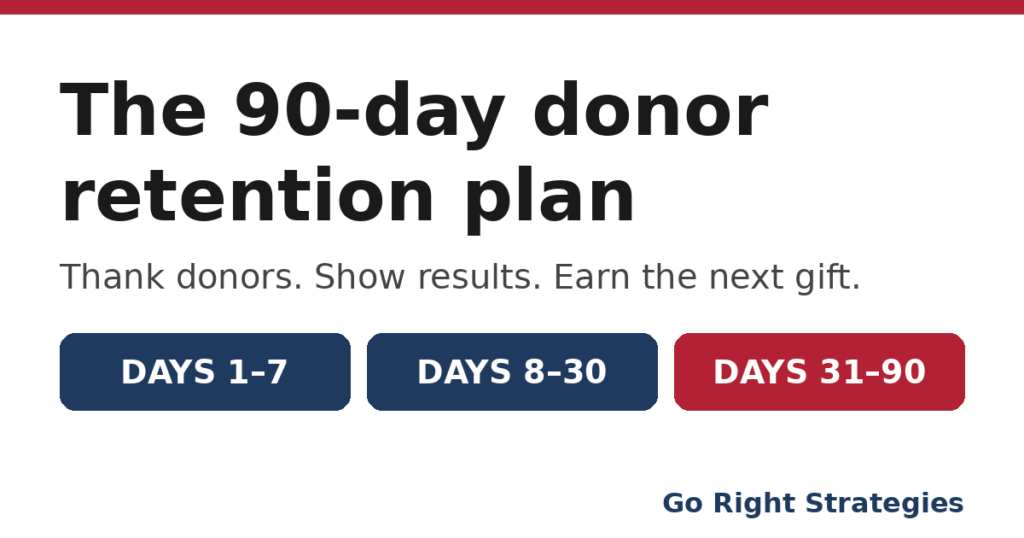
This 90-day plan gives campaigns and committees a practical post-election donor thank-you and retention schedule. It covers the first week, the first month and the period through day 90, with separate notes for a win and a loss.
Why a donor retention plan matters now
Election season trains supporters to expect urgency. After Election Day, that urgency drops, and so does attention. A donor who hears nothing for weeks may decide the campaign only wanted money. A donor who gets a thoughtful thank-you and a clear report is more likely to stay engaged for the next fight.
Retention also protects your data. Donors move, change phone numbers and choose different ways to hear from you. The weeks after an election are the right time to clean records, honor preferences and decide which supporters want to stay close. If you are rebuilding the acquisition side, our small-dollar donor program guide covers how to grow a durable base.
Days 1 to 7: send the post-election donor thank-you
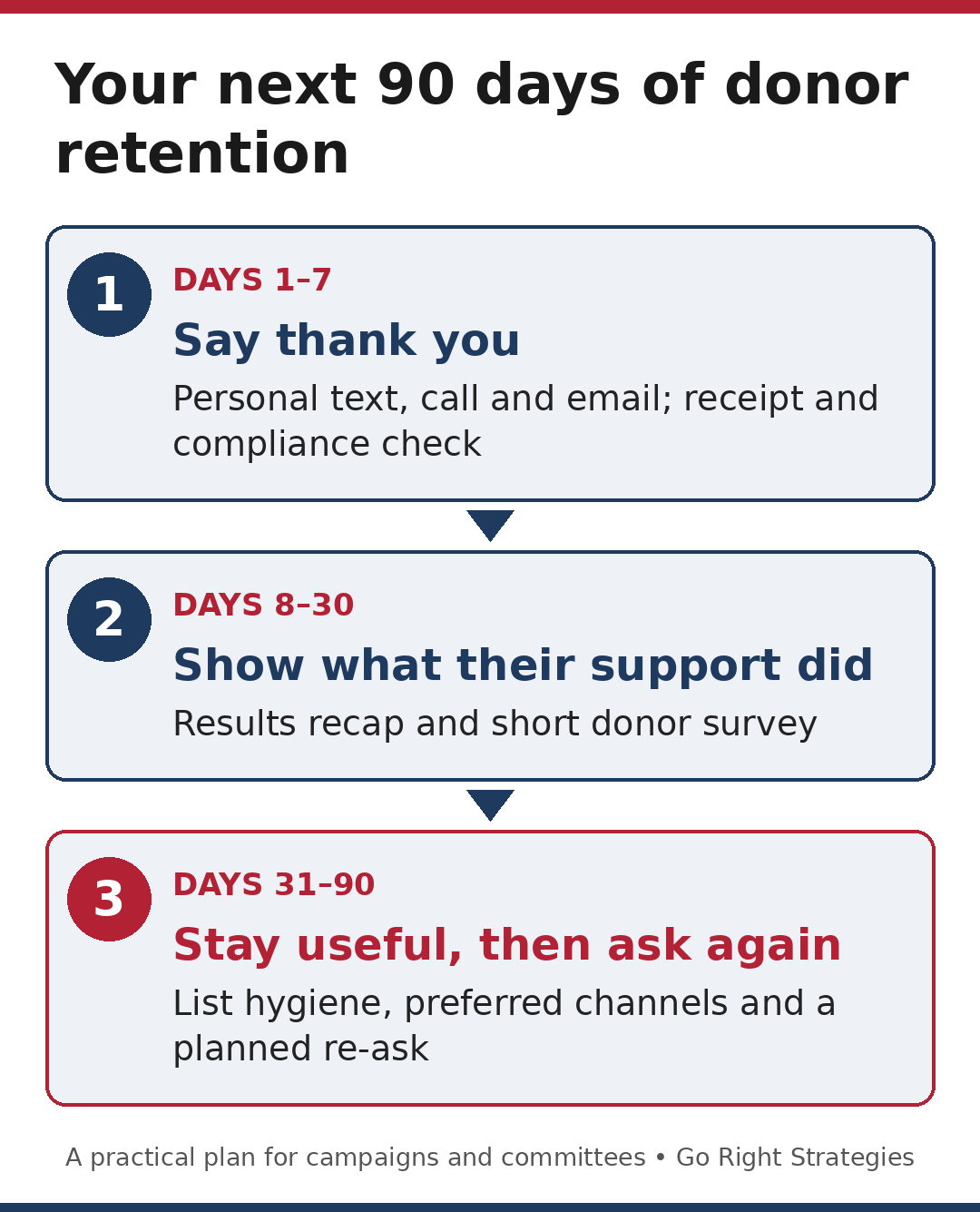
The first week is for gratitude, not another ask. Start with your most engaged supporters, recurring donors, hosts and volunteers who also gave. Then reach the wider file in planned waves.
- Text: Send a short, personal thank-you that names the race and avoids a donation link. A P2P texting program lets your team respond to replies one by one.
- Call: Use live calling for top supporters, recurring donors and people who helped beyond giving. A real conversation can uncover concerns, ideas and volunteer interest.
- Automated message: For a broad supporter list, a short recorded thank-you through automated calling can deliver the message efficiently when the script, timing and required permissions are in order.
- Email: Send a signed note from the candidate or committee leader. Keep it sincere, specific and free of manufactured urgency.
- Digital ads: Use digital ads to thank supporters publicly and keep the mission visible. In the first week, the ad should say thanks, not ask for money.
Use the first week to check the basics too: receipts, refunds, contribution limits, designations and any unresolved compliance questions. Do not assume a post-election gift can be used for the next race or debt without checking the rules.
Days 8 to 30: share results and ask for feedback
Once the immediate thank-you is complete, send a results recap. Explain what donors helped make possible: voter contact, outreach, volunteer activity, ads, events or the issues the campaign pushed into the debate. Use only figures your team can document. If a final result is still pending, say so plainly.
This is also the right time for a short donor survey. Ask what issue motivated their support, how they prefer to hear from you and whether they want to stay involved. Keep it brief. The goal is to learn and listen, not to build a long questionnaire.
Before you draw conclusions about which channels worked, review your attribution. Our guide to post-election response and matchback measurement explains how to separate useful lessons from guesswork.
Days 31 to 90: clean the file and build the re-ask calendar
The second half of the plan turns gratitude into a durable program. Start with list hygiene. Remove duplicates, process opt-outs, update addresses and phone numbers, and record each supporter’s preferred channel. Mark donors who asked for fewer contacts. Our donor data services can support segmentation and cleanup, and the guide to protecting voter and donor lists covers access controls and security.
Next, build a re-ask calendar that respects the relationship. Space messages around useful updates rather than a fixed fundraising quota. A sound sequence might include a thank-you, a results recap, a survey, an issue update and then a clear ask tied to a real need.
Make every ask truthful and specific. If the campaign has debt, say so accurately. If the committee is preparing for a future race, explain the purpose. Federal campaigns raising money after the election to retire debt must follow the Federal Election Commission’s rules on raising contributions to retire debts. Those rules include designations, contribution limits and net debts outstanding. State and local rules vary, so confirm them with counsel or your filing office.
Channel-by-week donor retention table
| Period | Text | Call | Digital ads | |
|---|---|---|---|---|
| Days 1 to 7 | Personal thank-you; reply to responses | Live calls to top supporters; optional recorded thank-you | Signed thank-you note | Thank-you message to supporter audiences, no ask |
| Days 8 to 30 | Results recap link or survey invitation | Feedback calls to key donors and hosts | Results recap and donor survey | Short recap or issue update |
| Days 31 to 60 | Preference check and opt-out handling | Calls to lapsed or high-value donors with updated data | Issue or committee update | Stay-connected messages to consented audiences |
| Days 61 to 90 | Planned re-ask when there is a clear purpose | Personal follow-up for major or recurring donors | Specific ask with accurate purpose | Supportive ads aligned with the re-ask |
Swipe to see more →
If your campaign won
Thank donors as partners in the result. Tell them what comes next: transition, governing priorities, constituent service or the next legislative fight. Avoid sounding as though the campaign is already demanding the next check. Invite supporters to stay involved through updates, events or volunteer roles, then return with a purposeful ask after you have shown how their support matters.
If your campaign lost
A loss calls for a clear, steady message: thank donors, explain the work they made possible and call supporters to regroup. Do not frame the other side’s win as acceptable or celebrate it. Explain what conservatives must do to win it back, from building a stronger list to recruiting volunteers and pressing the issues voters care about.
If there is campaign debt, be transparent and follow the rules. If there is no debt, focus first on gratitude and the path forward. Supporters will be more ready to join the next effort if they believe the campaign learned from this one.
Put the plan into practice
The best post-election donor retention plan uses every channel in the right role: P2P texting for personal follow-up, automated calling for efficient broad messages, live calling for deeper conversations and digital ads to keep your mission visible. Together, they help you thank donors well, keep them informed and earn the next gift.
Go Right Strategies helps Republican campaigns and conservative committees plan fundraising programs with clean data, clear messaging and compliant outreach across P2P texting, automated calling, live calling and digital ads. Talk with us about your next 90 days.
This is general information, not legal advice. Confirm fundraising and compliance rules with your counsel, treasurer or filing office. Graphic: Go Right Strategies, creator of the timeline and featured graphics for this donor retention guide.