
Updated Nov. 2, 2026.
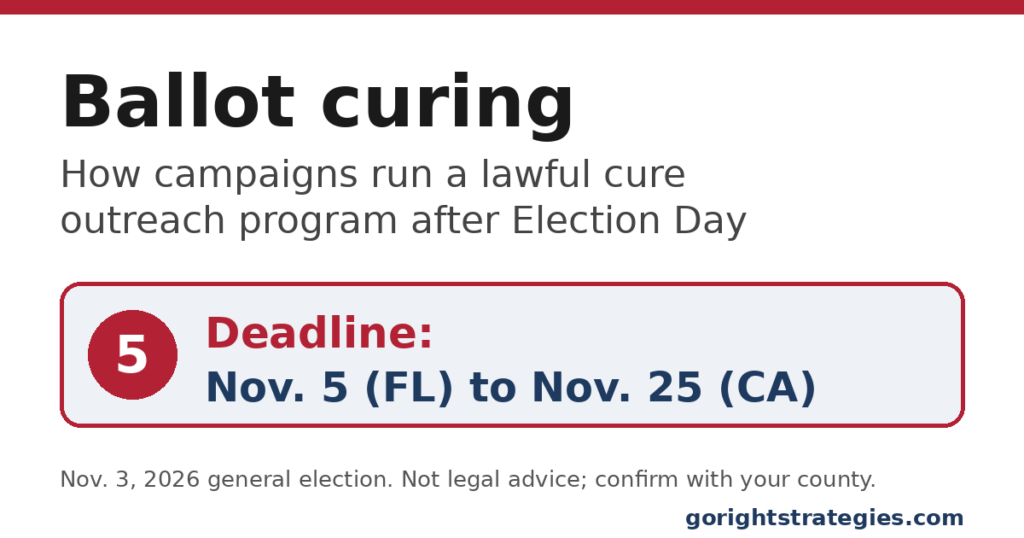
Ballot curing is the legal process that lets a voter fix a problem with a mail ballot, such as a signature that does not match the file or a missing ID number, so a lawfully cast vote can be counted. For the Nov. 3, 2026 general election, most of the cure work happens from Nov. 4 through Nov. 10, and some deadlines fall within 48 hours of the polls closing. Campaigns that plan now can help their voters finish the process the right way: through the official county office, on the official form, before the official deadline.
This guide covers the campaign operations side: what the law sets up, the deadlines in 10 states we checked against official sources on Nov. 2, 2026, and how texting, calls and ads can support a cure program without crossing any lines.
What ballot curing is, and what it is not
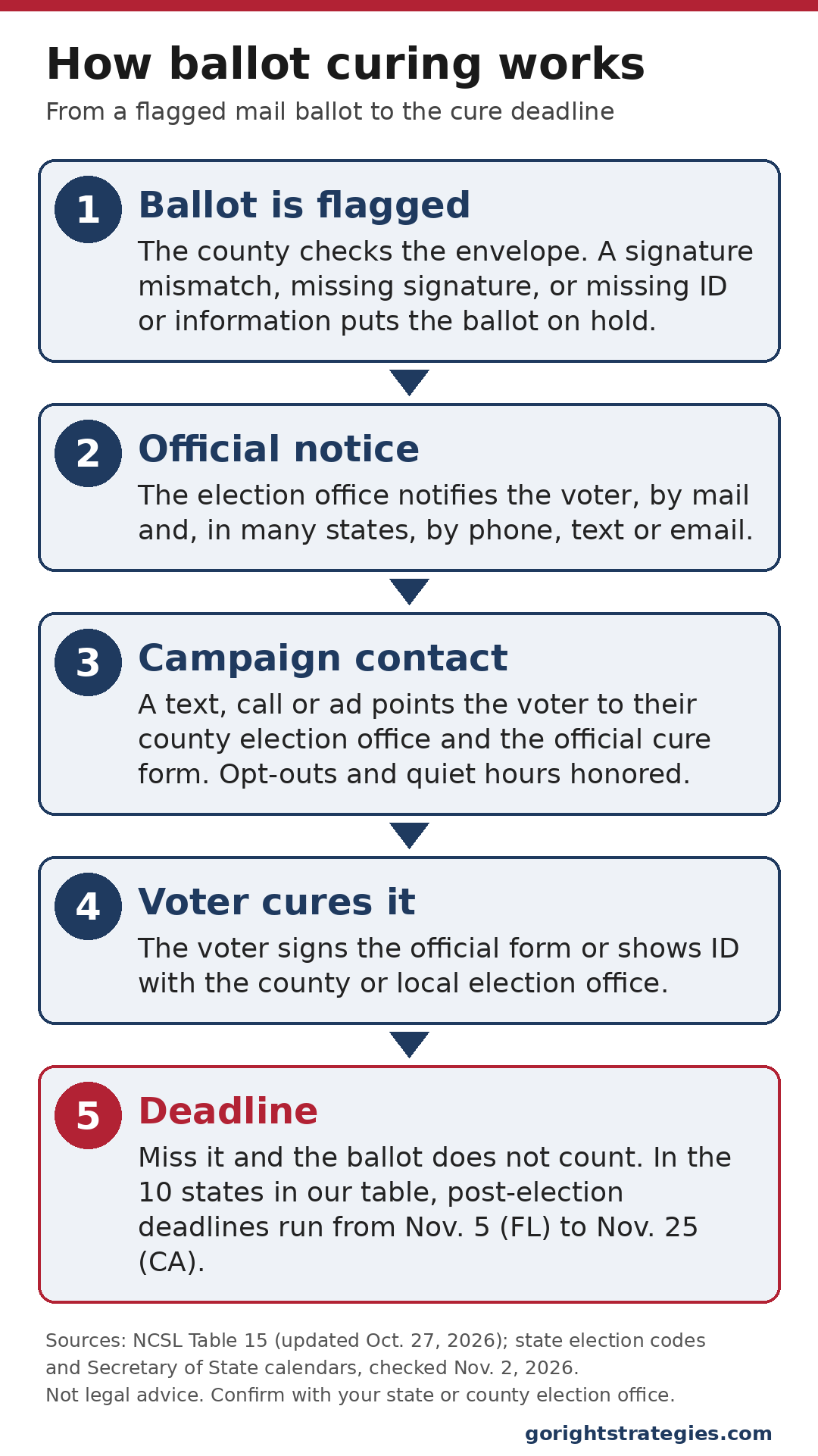
Election officials review every returned mail ballot envelope. When something is wrong, the ballot is set aside and the voter gets a notice. According to the National Conference of State Legislatures (NCSL), Table 15, updated Oct. 27, 2026, 35 states and the District of Columbia have a statewide cure process. Pennsylvania leaves it to each county.
Curing is an integrity safeguard, not a loophole. The voter must prove identity on a form the state or county prescribes, and the election office decides whether the ballot counts. A campaign never handles the ballot, never fills out the form for the voter, and never decides anything. Its job is to make sure an eligible voter who was flagged knows about the notice, the deadline and where to go.
Common curable problems include:
- A signature that officials find does not match the voter’s record.
- A missing signature on the envelope.
- Missing or mismatched ID or other information, where state law requires it.
Not every defect is curable. In North Carolina, for example, a missing witness identification cannot be cured under G.S. 163-230.1(e1). In those cases the right message is to contact the county board about the voter’s options, not to promise a fix.
Ballot curing deadlines by state for Nov. 3, 2026
The dates below apply to the Nov. 3 general election. We checked each one against the state statute or Secretary of State calendar on Nov. 2, 2026. Where NCSL’s summary differed from the statute, we used the statute as amended through 2026 session laws.
Closest deadlines: FL Thu. Nov. 5 · GA/MI Fri. Nov. 6
| State | Cure deadline | Where the voter cures | Official source |
|---|---|---|---|
| Arizona | 5 p.m. Sun., Nov. 8 (fifth calendar day) for a mismatched signature; a missing signature had to be added by 7 p.m. Election Day | County recorder | Laws 2024, Ch. 1, Sec. 22; A.R.S. 16-550; AZ SOS |
| California | 5 p.m. Wed., Nov. 25 (22 days after) | County elections official | Elec. Code 3019 |
| Colorado | 11:59 p.m. MT Thu., Nov. 12 (moved a day for Veterans Day) | County clerk | CO SOS 2026 calendar |
| Florida | 5 p.m. Thu., Nov. 5 | County supervisor of elections | Fla. Stat. 101.68 |
| Georgia | 5 p.m. Fri., Nov. 6 | County board of registrars | GA SOS 2026 calendar |
| Michigan | 5 p.m. Fri., Nov. 6 | City or township clerk | MCL 168.766 |
| Nevada | 5 p.m. Mon., Nov. 9 | County clerk or registrar of voters | NRS 293.269927 |
| North Carolina | Noon Tue., Nov. 10 (fifth business day) | County board of elections | S.L. 2026-60, Sec. 1.3 (amends G.S. 163-230.1(e1)) |
| Ohio | Sat., Nov. 7 (fourth day after) | County board of elections | R.C. 3509.06 |
| Texas | Mon., Nov. 9 (sixth day after) | Early voting clerk, or the SOS Ballot by Mail Tracker for ID numbers | Elec. Code 87.0411; VoteTexas.gov |
Swipe to see more →
Three details matter for planning. Arizona’s 2024 law set a fifth calendar day cure window for 2024 through 2026 federal elections, so the statute’s “fifth business day” text does not control this year. Colorado’s deadline is eight days after the election, but because Nov. 11 is Veterans Day it moves to Nov. 12. California does not extend its deadline for holidays. If your state is not listed, start with NCSL’s table, then confirm the date with your Secretary of State or county election office.
Who a cure program contacts
Start with official data only. Some states give that data to campaigns or parties directly. Arizona’s county recorders, under A.R.S. 16-550, must send qualified political parties a daily list of voters whose signatures need curing from the Wednesday after the election through the end of the cure period. In other states, work from the ballot status files your county or Secretary of State makes available to campaigns, where the law allows it.
Contact only voters on that list, and only about their own ballot. Keep the list tight, refresh it daily and pull anyone the county shows as cured. Calling or texting a voter whose ballot was already accepted wastes the window and confuses people. If you built your mail ballot chase from official files, the same discipline applies here.
How each channel supports ballot curing
The cure window is short, so most programs use several channels at once. Each one has its own rules, and each message should do the same thing: send the voter to the official office and the official form. Our voter outreach and engagement page covers how these channels fit together.
- P2P texting. A peer-to-peer text can be a quick first touch. It should name the county election office, the deadline and the office’s official phone number or link, and nothing more.
- Automated calling. Pre-recorded calls can reach many flagged voters at once with the deadline and the office’s phone number. Follow federal and state robocall rules, including consent where required, caller ID and an opt-out on every call.
- Live calling. Live calls handle the harder cases: a voter who does not understand the notice, needs the county office’s hours or cannot travel. Callers should read from an approved script and transfer complex questions to the county office rather than guessing.
- Digital ads. Ads cannot target a specific flagged voter in most cases, but they can remind a district’s mail voters to check their ballot status on the official state or county lookup before the deadline.
Rules that apply to all four channels:
- Point to official sources only. Link the Secretary of State or county election office page and give the office’s own phone number. California, for example, accepts only forms developed by the Secretary of State or an elections official under Elec. Code 3019(n), so never send a homemade form.
- Do not touch ballots or forms. Help the voter find the form. The voter signs and returns it.
- Honor opt-outs right away. Honor every opt-out and do-not-call request on every channel.
- Respect quiet hours. A tight deadline does not suspend state calling and texting windows.
- Stay accurate. Use the deadline and method from the county notice. If anything is unclear, the script should say “call your county election office” rather than guess.
A day-by-day plan for Nov. 4 to Nov. 10
- Wednesday, Nov. 4: Pull the first official cure list and send the first texts. In Florida the deadline is the next day.
- Thursday, Nov. 5 and Friday, Nov. 6: Follow texts with live calls to voters who have not cured. Georgia and Michigan close Nov. 6.
- Weekend, Nov. 7 and 8: Ohio closes Nov. 7 and Arizona Nov. 8. Arizona recorders’ offices must stay open the weekend after a federal election while ballots still need curing.
- Monday, Nov. 9 and after: Nevada and Texas close Nov. 9, North Carolina at noon Nov. 10, Colorado Nov. 12 and California Nov. 25. Keep refreshing the list and stop contact once a voter is cured or the deadline passes.
This is general information, not legal advice. Cure rules change and counties add their own procedures. Confirm every deadline and method with your state or county election office, and with your campaign’s counsel.
Need help with a post-election cure program?
We help campaigns run lawful voter contact on tight timelines, with official data, approved scripts and strict opt-out handling. Talk through your cure program with us
Graphic: Go Right Strategies, built from NCSL Table 15 and the state election sources linked in the table above, checked Nov. 2, 2026.